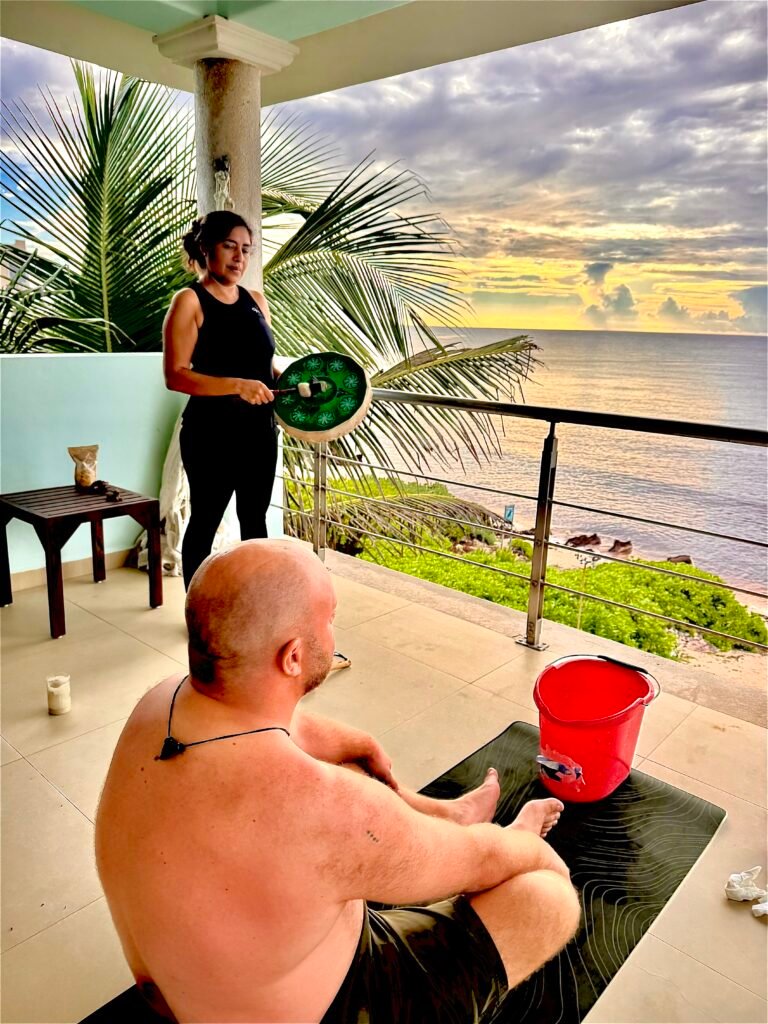
A kambo retreat mexico experience should feel very different from booking a ceremony while on vacation. For many people, the decision arrives after a long season of carrying too much: relentless responsibility, grief that has nowhere to go, emotional exhaustion, a relationship that feels distant, or the quiet realization that old ways of coping are no longer enough.
The setting matters, but so does the structure around it. A private retreat in Riviera Nayarit or Bahía de Banderas can offer space away from familiar demands. Yet lasting change is rarely created by a single intense experience. It is supported by careful preparation, responsible facilitation, time to rest, and an intentional path for returning to everyday life.
Kambo Is Not a Casual Wellness Add-On
Kambo is a traditional practice involving the secretion of the giant leaf frog, Phyllomedusa bicolor. In a ceremonial setting, it is typically applied to small superficial points on the skin under the guidance of a trained practitioner. The experience can be physically demanding and often includes pronounced nausea, vomiting, sweating, dizziness, and fatigue.
For some people, the appeal is not simply the intensity of the practice. It is the opportunity to step out of habitual patterns, meet difficult emotions with support, and create a meaningful pause before choosing what comes next. That said, kambo is not appropriate for everyone, and it should never be presented as a cure for trauma, depression, PTSD, addiction, or any medical condition.
A thoughtful retreat holds both truths at once: people may seek a deeply personal and spiritually meaningful experience, and they also deserve candid information about physical risks and limitations. Kambo can carry serious risks, including dehydration, fainting, and electrolyte imbalance. A responsible provider does not minimize these considerations or treat screening as a formality.
What a Structured Kambo Retreat in Mexico Looks Like
The quality of a retreat is often revealed before a guest arrives. A well-organized program begins with a clarity conversation and participant screening, not a pressure-filled invitation to commit. This early stage is a time to discuss health history, current medications, emotional readiness, intentions, travel needs, and the level of support that may be appropriate.
Screening may identify reasons to postpone or decline participation. Certain cardiovascular conditions, seizure history, significant mental health concerns, pregnancy, particular medications, and other health factors can make a kambo experience unsuitable. Full and honest disclosure matters. It helps the retreat team make decisions with care, and it helps guests enter the process with informed consent rather than expectation or urgency.
Preparation should also be personal. Someone who is depleted after years of caregiving may need a slower, more restorative pace than someone navigating a major life transition. A couple seeking reconnection may need facilitated conversation and private time together alongside individual reflection. There is no universal itinerary that can honor every nervous system, history, or intention.
At Kambo Wellness Center, the retreat journey is designed as more than an isolated ceremony. Private hospitality, guided practices, therapeutic support, and integration are considered parts of one continuum of care. The goal is not to manufacture a breakthrough. It is to create conditions where honest insight, rest, and meaningful next steps have room to emerge.
Privacy Changes the Experience
Many guests arrive accustomed to performing competence. They lead teams, care for families, make difficult decisions, or keep moving because stopping has felt impossible. In a group setting with limited personal attention, that pattern can continue even when the stated purpose is healing.
A privacy-focused retreat offers another possibility. It allows a guest to be supported without needing to explain their full story to strangers or manage another person’s experience. For couples, discretion can make it easier to speak plainly about resentment, loss of intimacy, shared grief, or the fear that they have become roommates rather than partners.
Luxury, in this context, is not excess for its own sake. It is the comfort, quiet, attentive pacing, and protected environment that can help a person soften their guard. When daily logistics are handled with care, more energy becomes available for reflection and recovery.
Preparation Is Part of the Work
An intentional retreat begins before travel. Guests may be asked to adjust routines, avoid certain substances or supplements as directed by the care team, organize practical responsibilities at home, and clarify why this moment matters. These steps are not meant to make the process rigid. They reduce unnecessary stress and create a cleaner boundary between ordinary life and retreat time.
Emotional preparation deserves equal attention. It can help to arrive with an open intention rather than a demand for a specific outcome. “I want to understand what I am avoiding” is often more useful than “I need to be fixed by Friday.” Healing does not always arrive as relief. Sometimes it begins as a clearer recognition of what has been asking for attention.
A trauma-aware environment also respects pacing. Intense experiences are not automatically transformative, especially for someone whose system has spent years in survival mode. The right retreat team watches for overwhelm, makes space for consent and choice, and understands that slowing down can be more supportive than pushing through.
The Value of Multidisciplinary Support
Kambo may be one element of a broader retreat experience, but it should not have to carry the entire weight of a person’s healing hopes. Depending on the program and an individual’s needs, complementary support may include psychotherapy, somatic facilitation, breathwork, hypnotherapy, sound healing, restorative practices, and medical oversight where appropriate.
This broader approach matters because insight needs somewhere to land. A guest may recognize a longstanding pattern of self-abandonment, unresolved grief, or emotional disconnection. The next question is how that realization will be held. Therapeutic and somatic modalities can help translate a powerful moment into language, body awareness, boundaries, or a practical change in daily life.
Professional support also brings needed discernment. Sacred-medicine work is not a substitute for emergency care, psychiatric treatment, or an ongoing relationship with a licensed mental health professional when those are needed. The most trustworthy retreat providers are clear about their scope, collaborate responsibly, and encourage guests to maintain appropriate outside care.
Integration Is Where the Retreat Becomes Personal
The days after a retreat can feel tender. A person may return home refreshed, emotional, uncertain, clear, or all of these at once. The familiar environment has not changed, and old pressures can quickly reappear. This is why integration is not an optional final conversation. It is the bridge between retreat insight and lived reality.
Integration support may involve guided reflection, follow-up sessions, practices that support nervous system regulation, or a plan for difficult conversations and boundaries. For a professional experiencing burnout, that may mean reconsidering the pace of work rather than making a dramatic decision overnight. For a couple, it may mean protecting a weekly space for honest connection. For someone grieving, it may mean allowing sorrow to remain present without treating it as a failure to heal.
The most meaningful measure of a retreat is often quiet and gradual. It may show up as a clearer no, a more honest apology, a return to rest, or the willingness to ask for ongoing support. Those changes can be less dramatic than a ceremony, but they are often more enduring.
Choosing the Right Retreat Provider
Before committing, ask how the provider screens participants, who guides the experience, what support is available during and after the retreat, and how privacy is protected. Ask direct questions about medical considerations, practitioner training, emergency planning, accommodations, and what happens if the program does not feel right once you arrive.
Pay attention to the quality of the response. A responsible team will not promise certainty, dismiss your concerns, or suggest that intensity is proof of healing. They will make room for questions and recognize that declining or postponing participation can be the wisest choice.
The right retreat is not necessarily the one with the boldest promises. It is the one that meets your desire for transformation with the same seriousness it brings to your safety, your story, and the life you will return to afterward.
