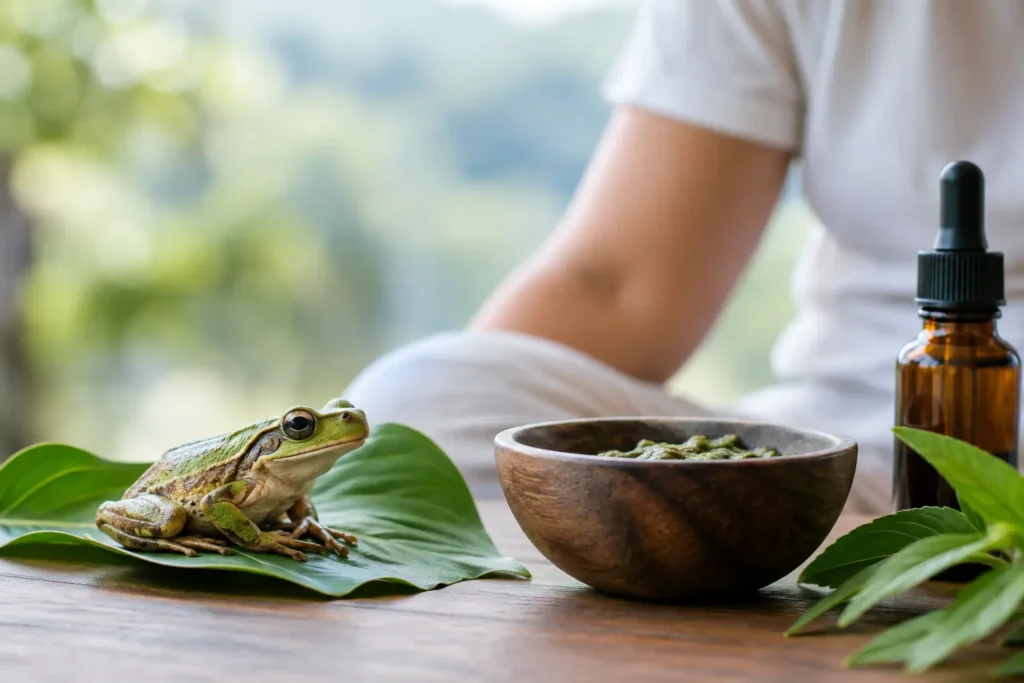
A person considering kambo is rarely looking for another wellness trend. They may be carrying grief that will not soften, exhaustion that rest has not touched, or a sense that life has become disconnected from meaning. So, is kambo safe? The honest answer is that it depends greatly on the person, their health history, the preparation, and the standard of care surrounding the experience. Kambo is not casual, and it should never be treated as a quick detox or a test of willpower.
Kambo is a traditional Amazonian practice involving a secretion from the giant leaf frog, applied through small superficial burns in the skin. It can produce an intense, short-lived physical response, often including nausea, vomiting, sweating, flushing, dizziness, and changes in blood pressure or heart rate. Some people describe the experience as emotionally clarifying or deeply symbolic. Those personal accounts deserve respect, but they are not a substitute for careful risk assessment or medical evidence.
For people seeking a meaningful reset, the safer question is not simply whether kambo is safe in the abstract. It is whether this practice is appropriate for you, right now, within a setting designed to protect your well-being.
Is Kambo Safe for Everyone? No.
Kambo can carry serious risks, particularly when it is offered without adequate screening, hydration guidance, informed consent, or trained supervision. The practice is not appropriate for everyone, and a responsible provider should be willing to say no when a person’s health profile calls for a different path.
There have been reports of severe reactions associated with kambo, including dangerous electrolyte imbalances, fainting, seizures, liver complications, psychosis, and cardiac events. These outcomes are not the expected experience, but they are real enough to require humility and discipline from anyone facilitating this work. The intensity of vomiting and fluid intake alone can create risk when someone follows unsafe advice or arrives physically depleted.
People with heart disease, low blood pressure, a history of stroke, seizure disorders, significant liver or kidney concerns, or serious mental health conditions require especially careful consideration. Kambo may also be unsuitable for those who are pregnant or breastfeeding, recovering from surgery or acute illness, managing an eating disorder, or taking medications that affect blood pressure, blood clotting, mood, fluid balance, or neurological function.
This is not a complete list. A qualified medical professional who understands your personal history is the right person to help assess health concerns. A retreat or facilitator should never ask you to hide medication use, stop prescribed medication on your own, or dismiss symptoms that warrant medical attention.
Safety Begins Long Before the Ceremony
The most meaningful safety practices happen before anyone enters a ceremonial space. A thoughtful program begins with a private conversation about intentions, physical health, medications, mental health history, substance use, and the support available after the retreat. This is not bureaucracy. It is an act of care.
A thorough screening process may determine that kambo is not the right fit, or that the timing is wrong. That can feel disappointing when someone has traveled far or placed hope in a particular experience. Still, being redirected toward rest, therapy, somatic work, breathwork, or another form of support can be the most responsible outcome.
Preparation also includes clear, individualized guidance around food, hydration, alcohol, recreational substances, sleep, and medications. Generic rules posted online are not enough. Overhydration can be dangerous, just as dehydration can be dangerous. What is appropriate depends on the individual, which is why one-size-fits-all instructions have no place in serious care.
An ethical provider also explains what kambo can and cannot promise. It is not a proven treatment for trauma, PTSD, depression, addiction, autoimmune conditions, or chronic illness. It should not replace medical care, psychiatric care, or evidence-based therapy. For some people, it may sit within a broader personal or spiritual healing process. For others, a different modality will be more supportive and less risky.
The Setting Changes the Risk
No ceremonial environment can remove every risk. What it can do is reduce avoidable harm through competent oversight, appropriate boundaries, and a clear emergency plan.
A responsible setting has facilitators who are trained to recognize when a participant is not responding as expected. It maintains close observation throughout the experience, protects physical privacy, and does not pressure a person to continue because they have already begun. The goal is not to endure the most intense experience possible. The goal is to preserve dignity and safety while honoring a person’s stated intentions.
The physical environment matters, too. Someone who is lightheaded, vomiting, or emotionally vulnerable needs calm support, sanitation, access to emergency resources, and people who remain present. They do not need an audience, a performative atmosphere, or a facilitator who treats distress as proof that the process is working.
At Kambo Wellness Center, this philosophy is reflected in a structured retreat journey that prioritizes screening, preparation, privacy, guided care, and integration rather than an isolated ceremony. Luxury is not only about a beautiful setting. In a healing context, it also means having room to slow down, be known as an individual, and receive attentive support without being rushed back into ordinary life.
Emotional Readiness Matters Too
Physical eligibility is only one part of the conversation. Kambo can be intense, and intensity may bring forward fear, grief, memories, or emotions that have been held tightly for a long time. A person in an acute crisis, severe depression, active psychosis, or a period of profound instability may need a more clinically appropriate level of care before considering an experience like this.
Trauma-informed facilitation does not assume that catharsis is always healing. Sometimes the most healing choice is to move slowly, establish safety in the body, and build resources before approaching deeper material. A high-quality program makes room for that truth. It does not frame hesitation as resistance or imply that a participant must push past their limits to transform.
For couples, this distinction can be especially important. Shared healing experiences may open meaningful conversations, but they can also expose tender dynamics. Each partner should have space for individual consent, private support, and the freedom to choose a different path without pressure from the other.
Integration Is Part of Safe Practice
The hours after kambo are not an afterthought. They are when the body settles and a person begins to make sense of what they felt, noticed, or released. Without integration, a powerful experience can become confusing, idealized, or disconnected from daily life.
Supportive integration may include quiet rest, nourishing meals, reflective conversation, journaling, psychotherapy, somatic practices, or a clear plan for returning to work and relationships. The right approach depends on the person. What matters is that the experience is placed in context rather than treated as a dramatic event that must speak for itself.
Pay attention to how a provider discusses aftercare. If the conversation ends at the ceremony, that is a concern. If there is no plan for emotional support, no pathway for follow-up questions, and no willingness to refer out when needs exceed the retreat’s scope, the container is incomplete.
Questions Worth Asking Before You Commit
Before choosing a kambo experience, ask how screening is conducted, who reviews medications and health concerns, what happens if you are found ineligible, and what emergency procedures are in place. Ask who will be present during the experience, how many participants each facilitator supports, and whether you can pause or stop at any time.
You may also ask how the provider approaches trauma, privacy, and post-retreat support. Listen closely to the quality of the answer. Reassuring language is not enough. You are looking for specifics, honest limits, and a willingness to prioritize your welfare over a booking.
If you experience chest pain, trouble breathing, loss of consciousness, a seizure, severe confusion, or symptoms that feel alarming during or after kambo, seek urgent medical care. No spiritual framework should delay an appropriate medical response.
The right healing experience should leave you with more agency, not less. Sometimes that means choosing a carefully supported retreat. Sometimes it means deciding that kambo is not your next step. Both choices can be acts of profound self-respect.
