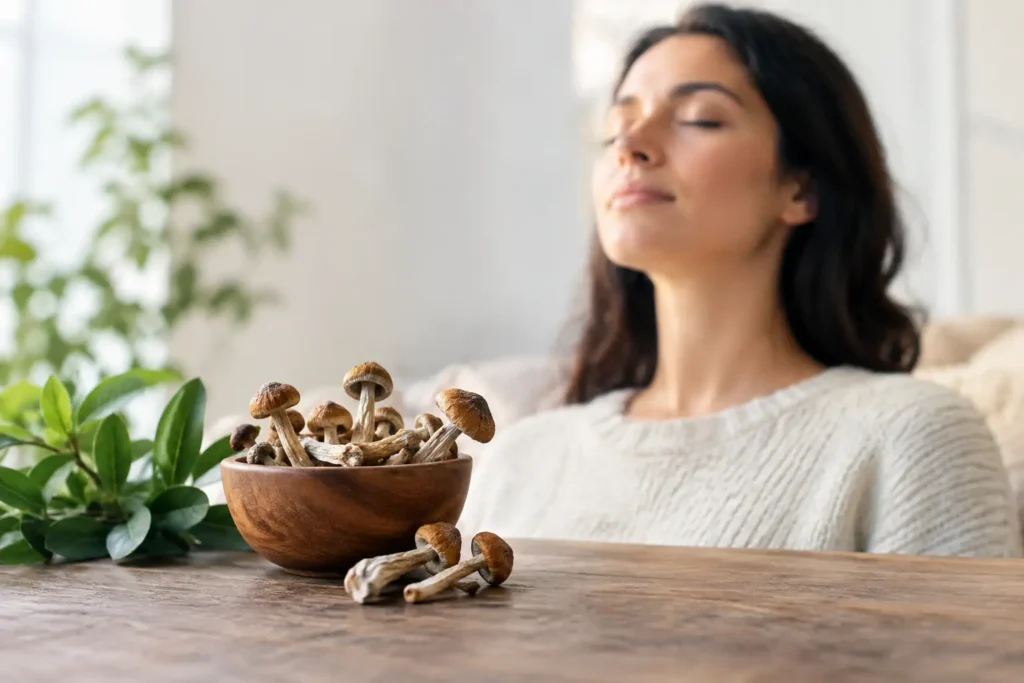
A person can look composed from the outside while carrying years of grief, fear, emotional exhaustion, or a nervous system that never seems to settle. For those seeking a deeper reset, the benefits of psilocybin for mental health and trauma have become a meaningful area of research and conversation. The interest is understandable: early clinical studies suggest that, in carefully prepared and professionally supported settings, psilocybin may help some people approach entrenched emotional pain from a new perspective.
This is not a promise of a quick cure, nor is it an experience to approach casually. Trauma healing asks for pacing, safety, and support before, during, and long after any altered-state work. For the right person, in the right legal and clinical context, psilocybin-assisted work may create an opening for insight, emotional release, and renewed connection to life. What happens with that opening depends greatly on the quality of preparation and integration around it.
What psilocybin may change in the healing process
Psilocybin is a naturally occurring psychedelic compound found in certain mushrooms. In research settings, it is being studied for conditions including depression, anxiety associated with serious illness, substance use disorders, and post-traumatic stress symptoms. Researchers are still learning who may benefit, how durable those benefits are, and which forms of support make a difference.
One reason this work draws attention is that trauma is not always resolved through insight alone. A person may understand exactly why they react, withdraw, overwork, or remain on alert, yet still feel unable to change the pattern. Trauma can live in the body as much as in the story – through tension, numbness, disrupted sleep, disconnection, and a limited sense of safety.
A supported psilocybin experience may temporarily soften rigid thought loops and familiar defenses. Some people describe being able to meet painful memories with less avoidance, more compassion, or a feeling of distance from the beliefs that have governed their lives. Others report a renewed sense of meaning, connection, or hope after a period of emotional flatness.
These experiences are personal, and they are not always gentle. A meaningful session can include fear, grief, anger, or memories that have been carefully held away for years. The aim is not to chase a pleasant experience. It is to create conditions where what arises can be met safely, with skilled support and enough time to make sense of it afterward.
Potential benefits of psilocybin for mental health and trauma
The most compelling potential benefit is not that psilocybin erases a person’s history. It may help change their relationship with that history. When an old wound is no longer experienced as proof that someone is broken, unlovable, or permanently unsafe, new choices can become possible.
Greater emotional access without immediate avoidance
Many people living with trauma have learned to survive by disconnecting from feeling. That response can be protective, especially when the original experience was overwhelming. But over time, emotional numbing can also make joy, intimacy, and self-trust harder to access.
In appropriately supported work, psilocybin may help some participants contact emotions that have been buried or defended against. This is not valuable because intense emotion is inherently healing. It can be valuable when that emotion is held within a calm, prepared environment and followed by thoughtful care. Tears, anger, relief, tenderness, and grief may all carry information about what needs attention.
A shift in entrenched beliefs and inner narratives
Trauma often leaves behind harsh conclusions: “I am not safe,” “I have to manage everything alone,” or “I cannot let anyone close.” These beliefs may once have helped a person endure, but they can become restrictive long after the danger has passed.
Psilocybin-assisted psychotherapy is being explored partly because it may increase psychological flexibility. In simple terms, it may help a person see a long-standing pattern without being fully captured by it. That moment of perspective can support therapeutic work around self-compassion, boundaries, relationships, and new ways of responding under stress.
Relief from depressive disconnection and hopelessness
Depression can make life feel narrow. The future may appear fixed, colorless, or not worth reaching for. While psilocybin is not a replacement for individualized mental health care, clinical research has reported promising antidepressant effects for some participants in structured settings.
For a person who has felt emotionally shut down, an experience of connection – to self, loved ones, nature, spirituality, or a sense of purpose – can be deeply significant. Yet lasting change is not created by insight alone. The days and weeks afterward are where a person practices the choices that make that insight real.
More capacity for connection and relational repair
Trauma can affect how people receive love, ask for support, handle conflict, and allow themselves to be seen. Some people emerge from carefully facilitated psychedelic work with a greater ability to recognize the protective strategies operating in their relationships.
That awareness can be useful for individuals and couples alike. It may create room for more honest conversations, clearer needs, and softer responses. At the same time, psilocybin cannot repair a relationship where trust, accountability, or safety is absent. Relational healing requires continued communication and, in some circumstances, skilled couples or individual therapy.
Why the setting matters as much as the medicine
A psychedelic experience is highly sensitive to context. A person’s emotional state, medical history, intentions, environment, facilitators, and support network can all shape what unfolds. This is especially true for anyone carrying trauma, grief, or a history of feeling unsafe.
A responsible healing pathway begins before an experience takes place. Thorough screening helps identify whether psychedelic work may be inappropriate or require additional medical or psychiatric consultation. Psilocybin may not be suitable for people with certain personal or family histories of psychotic disorders or bipolar disorders, certain cardiovascular concerns, or medications that require careful review. It can also be destabilizing when someone is in an acute mental health crisis.
Legal status matters, too. Psilocybin laws differ by country, state, and local jurisdiction. Research findings should never be confused with an invitation to pursue unregulated use. Those considering any sacred-medicine or psychedelic-adjacent path should seek qualified medical and mental health guidance and ensure they understand the laws where they are located.
Within a carefully held retreat environment, privacy and comfort are not superficial details. A quiet setting, trusted facilitators, medical awareness, clear consent practices, and an unhurried pace can help a participant feel less guarded. For someone accustomed to carrying everything alone, being supported without pressure can be a profound part of the healing experience itself.
Integration is where insight becomes a life change
The days after an expanded-state experience can be tender. A person may feel clear and energized, emotionally raw, uncertain, or unexpectedly tired. They may have received an insight that feels obvious in the moment but difficult to live once ordinary responsibilities return.
Integration is the intentional process of bringing an experience into daily life. It may include psychotherapy, somatic practices, journaling, breathwork, rest, movement, creative expression, or conversations with a trusted support person. It can also mean making small practical changes: setting a boundary, reducing a numbing habit, speaking honestly with a partner, or creating more space for sleep and reflection.
At Kambo Wellness Center, the broader principle is that transformation deserves a container. Preparation, skilled facilitation, and post-retreat integration help ensure that a powerful experience is not left as an isolated memory. They give participants a way to translate insight into steadier habits, healthier relationships, and a more compassionate relationship with themselves.
Choosing discernment over urgency
People often seek transformative work when they are tired of carrying pain in familiar ways. That desire deserves respect, not urgency. The best question is not simply whether psilocybin can help, but whether this is the right time, setting, and level of support for you.
A thoughtful provider or clinician will welcome questions about screening, facilitator training, emergency protocols, medical coordination, confidentiality, aftercare, and the limits of what a program can promise. Be cautious of anyone who guarantees trauma resolution, minimizes risks, or treats intensity as evidence of healing.
Healing can begin with the decision to stop abandoning your own inner experience. Whether psilocybin becomes part of that path or not, choosing a private, well-supported space to listen to what your body and life have been asking for may be a meaningful first step.- kambowellnesscenter.com
